In very simple words, a farmer from northern Thailand shows how senseless the rat race and over consumption are. After giving a try to life in the city, advanced studies and purchased clothes, he listened to his inner voice telling him: “That’s stupid!” He went back to work the land and provide for himself and others. Just brilliant!
Showing posts with label activism. Show all posts
Showing posts with label activism. Show all posts
Sunday, August 3, 2014


Monday, April 22, 2013
What would you do to make the world a better place?
Happy Earth Day!
Some years ago, when I was studying sustainable development and the Earth Charter Initiative, I did a small study where I asked different people what would they do to improve our world.
In the next days I'll be posting some of the answers I collected, which I recorded in their native language and script besides an English translation. For each, I added a close up photo of the person, their first name, age, occupation, and their country or countries.
Below is the premise. I invite you to join and contribute with your own 2 cents. You can comment below or send the info to hisandhersustainabletrip@gmail.com and we'll post it for you.
What would you do to make a happy earth day truly happy?

Saturday, March 23, 2013
Aprovechá y compartí: llegó la Hora de la Tierra
 |
| Por el diseñador Patrick Cox (C) para The Green Thing |
Pero el "compartí" no viene sólo porque está bueno que invites a otros a que se unan a la iniciativa, sino porque para bajar nuestro consumo, es buena la idea compartir.
El diseñador de estas notas adhesivas tenía en mente eso mismo: ayudar a la gente a que dé aquellas cosas que ya no necesitamos, para reducir la cantidad de cosas nuevas que compramos.
Siguiendo la misma línea de pensamiento de no desperdiciar, otros dos diseñadores incentivan a que aprovechemos bien las cosas arreglándolas y usándolos hasta el final.
O sea: si está roto, no lo tires, arreglalo.
Y si no se gastó, no lo tires, seguí usándolo.
 |
| Domenic Lippa nos invita a arreglar lo que no funciona, ya sean cosas o problemas |
 |
| El dibujante e ilustrador Guil nos invita a usar el lápiz hasta el último pedacito. Según él, el mismo proceso de cambiar el medio contribuye al proceso creativo. |
Además de ver qué se puede reciclar o reusar, considerá otras inciativas: qué opciones de transporte tenés y si podés usar un poco más de pata o bici), qué es lo que hay en tu comida y en tu casa, si necesitás toda el agua que usás y con quién podés colaborar para cambiar las situaciones que no te gusten.
Monday, March 11, 2013
Activate: join forces for the Planet
 |
| Canadian activist Jeff Gibbs with friends in Madagascar |
"I have been working to launch a new organization called Global Activators. On February 15th, we implemented our inaugural program, called Spotlight Earth. It was a decentralized festival that took place across British Columbia on February 15th. There was a tremendous variety of creativity expressed at festival venues from Vancouver to Prince George, including film screenings, book readings, live music performances, drama skits, flashmobs, public art making, meditations, and guest speakers."
 |
| Activists concerned about the health of our oceans |
"Night of Planet Parties will see people organizing parties in their homes, attended by their friends and neighbours. If the local organizer wishes to be more ambitious they can join with friends to plan a larger public event at their university or community space. The type of party is up to each local organizer (dance party, dinner party, etc) as is the scale (e.g. ten friends at your home or a hundred folks at public event at your university). Each party will integrate screenings of short films, fundraising, and advocacy actions".
 |
| Kayak trip in Desolation Sound, on the Pacific |
Sunday, March 10, 2013
Organizate: faltan 15 días para la Hora de la Tierra
 |
| Activista canadiense Jeff Gibbs y amigos en Madagascar |
"He estado trabajando para poner en marcha una nueva organización llamada Activadores Globales. El 15 de febrero implementamos nuestro programa inaugural: Enfocados en el Planeta. Fue un festival descentralizado que tuvo lugar a través de la Columbia Británica, el 15 de febrero. Hubo una tremenda variedad de la creatividad expresada en las sedes del festival, de Vancouver a Prince George, incluyendo la proyección de películas, lecturas de libros, música en vivo, actuaciones, teatro, flashmobs, arte público, meditaciones y oradores invitados."
 |
| Dos activistas promoviendo el respeto por los océanos |
|
| Paseo en kayak por Desolation Sound, en el Pacífico |
Todos pueden organizar su fiesta particular o pública en donde vivan, a cualquier escala, desde "diez amigos en tu casa o en un centenear de personas en acto público en la universidad." Las fiestas estarán conectados por una transmisión en vivo para ayudar a dar sentido de unidad al evento. La organización Activadores Globales ayudará a los anfitriones de la fiesta con una detallada Guía de Organización, videos para transmitir y otros recursos. Los organizadores locales entrarán en el sorteo de unpaseo en kayak este verano (hemisferio norte) en Desolation Sound. Encuentre más información y el formulario de inscripción aquí.
Wednesday, March 6, 2013
Pedaleá: faltan 18 días para la Hora de la Tierra
 |
| Spokesperson By HarrimanSteel (C) |
El artista de hoy busca inspirar a que la gente use más pedal y menos petróleo. Dice "Dos ruedas son mejor que cuatro. Mejor para vos. Mejor para el medio ambiente. Mejor para todos."
El tema bici viene muy a propósito. Ayer publicamos dos artículos, en español y in English, sobre los esfuerzos que están haciendo un grupo de ciudadanos uruguayos para que su gobierno reconozca a la bicicleta como un medio de transporte válido y proporcione las estructuras necesarias para facilitar que eso sea así.
No sólo consiguieron más de 10.000 firmas, si no que se sumaron ciclistas de todo el mundo pidiendo ciclovías para los uruguayos.
Monday, March 4, 2013
Cerrá el agua: faltan 20 días para la Hora de la Tierra


Un paso extra que han tomado en esa comunidad fue utilizar el agua de lluvia para riego de plantas en el terreno y también para la cisterna de los inodoros.

Y obviamente cuenta con la aprobación de los usuarios, si nos guiamos por la carita feliz y la nota que dejaron (Hooray!!!!).
Si te gustó la idea de recoger el agua de lluvia para usos alrededor del hogar, el infograma acá abajo da algunas instrucciones.

Saturday, March 2, 2013
Caminá: faltan 22 días para la Hora de la Tierra
Un estudio danés encontró que aquellos niños que van a la escuela caminando o en bici se concentran mejor durante las clases. No es demasiado sorprendente y sin embargo, en entornos urbanos es cada vez menos común. La excusa es generalmente cuestiones de tiempo o seguridad. ¿Demasiado lejos? Sorry, la distancia no es una excusa suficiente. Si no, vean el ejemplo de Mario, un niño uruguayo que camina cada día 6 kilómetros de ida y vuelta a la escuela. ¡Eso es caminar!
Sin llegar a tales extremos, decidí empezar a cultivarles el gusto por las caminatas a mis sobrinos. Empezamos con caminatas a lo largo de la costa, que tienen la ventaja de contar con paradas para darse chapuzones y un montón de criaturas marinas para descubrir.
¿La iniciativa sustentable de hoy?
Sin llegar a tales extremos, decidí empezar a cultivarles el gusto por las caminatas a mis sobrinos. Empezamos con caminatas a lo largo de la costa, que tienen la ventaja de contar con paradas para darse chapuzones y un montón de criaturas marinas para descubrir.


¿La iniciativa sustentable de hoy?
 | ¡Animate a caminar! | |||
| (c) Marina Willer |
Friday, March 1, 2013
Desenchufate: faltan 23 días para la Hora de la Tierra

Desde 2007 World Wildlife (WWF) celebra Earth Hour (la Hora de la Tierra), un evento de participación masiva alrededor del mundo que busca mobilizar a la gente en torno al uso responsable de recursos. Cada año, más de 7000 ciudades y pueblos en más de 150 países apagan las luces por una hora en señal de apoyo.
Este año Earth Hour es el 23 de marzo de las 8:30 a las 9:30 de la noche. Puedes leer más sobre el evento en español aquí o ver el video oficial:
 |
| (c) Pete Fowler, illustrator and monster creator |
El evento aglutina todo tipo de iniciativas privadas y grupales alrededor del mundo. Por ejemplo, cada uno de los 23 días previos a la Hora de la Tierra, Do The Green Thing sacará un poster promoviendo un cambio en nuestro comportamiento que lleve a una disminución del consumo de energía.
El de hoy invita a desenchufarnos:
En los próximos días estaremos presentando más posters e iniciativas.
Thursday, February 21, 2013
Good intentions gone bad: what might happen to your donated clothes
A recent video by Oxfam through an article by Do The Green Thing reminded me of something I wrote last year while in Africa about good intentions gone awry. That situation sadly happens too often in international development and for that reason, it’s up to us to do the research and inform ourselves as best as possible, ask questions, and challenge simplistic answers.
While there are some things we might never have a definite answer for, I re-post what I published earlier to show another perspective and add to the discussion:
---
“What do you think of international development?”, asked our new friend Joca.
“Do you want the political correct answer or the cynic one?”, retorted Fadi.
 The truth is, international development has been heavily criticized in the last couple of decades. And not without reason. Fortunately, I don’t think anybody is so naive anymore to buy into the “Oh, we’ll go and save the world” kind of mentality. As pitfalls and mistakes have been exposed, people and organizations have become more savvy about how to generate positive change around the world.
One clear case of good intentions gone wrong was exposed in the documentary “The T-Shirts Travels.” The film shows how secondhand clothing, given away as charity in the West, ends up in Zambia (Mozambique’s neighbor to the northwest), enriching the middle person and ruining the local clothing industry in the process.
‘Every single clothing factory in Zambia went out of business; we do not have a clothing industry left in the country because the secondhand clothes are coming in.’ Mark O’Donnell, spokesman, Zambian Manufacturers Association
You can see the PBS 50-min documentary here:
https://www.youtube.com/watch?v=_iDNtwVL4sw
Want to know more about the issue? You can read about it here.
Wednesday, January 23, 2013
A disappointing transport plan: where are the bikes?
I recently read the transport plan for Uruguay up to 2030. It includes all the right buzz words -sustainability, quality of life, reducing impacts on energy and the environment, public safety-, but bicycles or nowhere to be seen (only one brief mention). Can't wrap my head around that omission.
Had it been 20 years ago, I would agreed people were not ready for bicycles (although there has always been a decent percentage of the population who uses bicycles for transport). But in the last years, there has been a burst in pro-bike groups, activists and bike-related shops. No reason for the government not to take advantage of that and provide the necessary infrastructure to promote that change.
The only hope is that the process goes the way it went in the Netherlands, and people keep on pushing the government to make bicycles an option. See how it worked there (English with subtitles in Spanish) in this 7-minute video:
Build them, and they'll come.
Had it been 20 years ago, I would agreed people were not ready for bicycles (although there has always been a decent percentage of the population who uses bicycles for transport). But in the last years, there has been a burst in pro-bike groups, activists and bike-related shops. No reason for the government not to take advantage of that and provide the necessary infrastructure to promote that change.
The only hope is that the process goes the way it went in the Netherlands, and people keep on pushing the government to make bicycles an option. See how it worked there (English with subtitles in Spanish) in this 7-minute video:
Build them, and they'll come.
Tuesday, January 1, 2013


Tuesday, November 6, 2012
Desaparecidos en acción: el por qué del prolongado silencio
Como habrán notado, las entradas en los últimos meses mermaron a un promedio de una por mes. Una vergüenza. Factor contribuyente es que Fadi ha practicamente abandonado el blog, pero la razón principal -si han estado atentos ya lo saben-, es que marchamos a África a salvar el mundo. Bueno, no tan así.

Marchamos a Mozambique a ofrecer nuestros servicios y conocimientos acumulados en 30 años de estudios y 20 de trabajo. Pueden ver un poco de lo que hicimos (todavía vamos a estar agregando cosas por un tiempo) en mi blog y en el de Fadi.
 El estímulo detrás de esta iniciativa que veníamos preparando hace tiempo fue la idea de que la sustentabilidad va más allá de plantar un par de verduras en tu jardín y cambiar el auto por la bici. Un mundo realmente sustentablemente no es tal si sólo se limita a un grupete de gente que puede darse el lujo de reducir su consumo a voluntad, tener acceso a agua, aire y alimentos libres de contaminación y otros privilegios. Mientras haya gente que se muera de enfermedades evitables y por ignorancia, esté circunscrita a una dieta insuficiente o insalubre, no pueda acceder a información ni tenga voz -ya sea en su comunidad, su país, o el mundo-, pues de sustentabilidad nada.
Con esa idea marchamos a aportar nuestros dos granitos de arena a uno de los países más sufridos en este momento. Siglos de colonialismo, dos décadas de guerras en los últimos 40 años (primero de independencia y después una guerra civil), desastres naturales y muchos otros obstáculos han dejado a Mozambique un poco baqueteado. En los últimos años viene despegando, al menos en términos económicos y en los números, debido a inversiones de todos lados y mucha plata para "desarrollo". Eso, por supuesto, genera toda otra serie de problemas. Siguiendo el lema de nuestro blog de "ver qué pasa" cuando uno intenta hacer lo que cree que está bien, terminamos descubriendo de primera mano cuáles son esos problemas. Pero eso quedará para otra entrada...
En las próximas entradas retomaremos los temas que veníamos trabajando: alternativas en la construcción, la alimentación, el transporte y otras cosas interesantes que nos vayamos encontrando en el camino.

Marchamos a Mozambique a ofrecer nuestros servicios y conocimientos acumulados en 30 años de estudios y 20 de trabajo. Pueden ver un poco de lo que hicimos (todavía vamos a estar agregando cosas por un tiempo) en mi blog y en el de Fadi.
El estímulo detrás de esta iniciativa que veníamos preparando hace tiempo fue la idea de que la sustentabilidad va más allá de plantar un par de verduras en tu jardín y cambiar el auto por la bici. Un mundo realmente sustentablemente no es tal si sólo se limita a un grupete de gente que puede darse el lujo de reducir su consumo a voluntad, tener acceso a agua, aire y alimentos libres de contaminación y otros privilegios. Mientras haya gente que se muera de enfermedades evitables y por ignorancia, esté circunscrita a una dieta insuficiente o insalubre, no pueda acceder a información ni tenga voz -ya sea en su comunidad, su país, o el mundo-, pues de sustentabilidad nada.Con esa idea marchamos a aportar nuestros dos granitos de arena a uno de los países más sufridos en este momento. Siglos de colonialismo, dos décadas de guerras en los últimos 40 años (primero de independencia y después una guerra civil), desastres naturales y muchos otros obstáculos han dejado a Mozambique un poco baqueteado. En los últimos años viene despegando, al menos en términos económicos y en los números, debido a inversiones de todos lados y mucha plata para "desarrollo". Eso, por supuesto, genera toda otra serie de problemas. Siguiendo el lema de nuestro blog de "ver qué pasa" cuando uno intenta hacer lo que cree que está bien, terminamos descubriendo de primera mano cuáles son esos problemas. Pero eso quedará para otra entrada...
En las próximas entradas retomaremos los temas que veníamos trabajando: alternativas en la construcción, la alimentación, el transporte y otras cosas interesantes que nos vayamos encontrando en el camino.
Monday, October 1, 2012
Recipes for disaster: our oil and plastic dependency

A guy decided to try the drilled-oil diet and film the experience. He "invited" his family (wife and two cute boys) to join in the fun. They did, a bit reluctantly, but ended up enjoying some of the changes more than the dad himself.
Getting rid of all plastics in modern life and trying to do without oil takes some planning and lots of behavioral changes. Specially if you're in Finland and you have to walk to the bus stop and then wait for the bus for a long time in below zero temperatures. The movie definitely reminded me of some of our initial struggles when we started to cut down on consumption.
I got to see the film during the 7 Dockanema -documentary festival in Maputo- this past September. In Portuguese it is titled "Receitas para o desastre" and it's a fun mix of English, Finnish and Portuguese subtitles. Couldn't help but think that for the majority of Mozambicans it would be quite a stretch to relate to the concerns of that suburban middle class European family. Yet, as development rolls over Mozambique (or at least Maputo) like a bulldozer, it'll become soon a concern here too.
More about the film here.
Or read it directly from the words of director John Webster here.
Check the trailer:
Or see the whole film in Vimeo here.
Now, what are you going to do? Do without the plastic bags at the supermarket? Buy un-packaged? Stick to the same computer / phone / whatever-plastic-encased gadget for a few years longer than the sellers would like? Get rid of the car or switch to an alternative-powered vehicle? Take the long, slow route over a flight? Help clean a park or a beach (or two)? Check some other examples of what can be done, here and here.
Tell us what action (big or small) are you taking to stop using, or reusing, or recycling or in any other way curve your consumption of plastics and oil. We would love to hear about them, plus we're always up to adopt other changes in our lives. We might actually enjoy them.
Wednesday, July 18, 2012
Día de limpieza de playas en Costa del Sol, Maputo
Maputo, la capital de Mozambique, tiene la triste fama de estar entre las 25 ciudades más sucias del mundo.
Según del index de salud y sanidad Mercer, Mozambique “suffers from lack of sanitation processes--specifically the lack of a solid waste removal system as well as sewage treatment. The capital city of Maputo feels the worst of these consequences. Piles of garbage line the streets, and the sewage in the river is visibly thick.” Mmmm. Lindo.
Es por eso que aprovechamos la oportunidad de participar (si lo habíamos hecho en el Atlántico, ¿por qué no en el Índico?) en la iniciativa de limpieza de la playa de Costa del Sol, al norte de la ciudad. El evento estuvo organizado por el departamento de responsabilidad social de el Banco Millenium BIM, la Escuela Portuguesa, la Escuela Primaria da Polana Caniço A y la organización no gubernamental Associação Moçambicana de Reciclagem (A.M.O.R.).
Se empezó temprano para evitar el calor del mediodía, pero siguió sumándose gente toda la mañana.
Botellas de cerveza de vidrio, latas de referezco, paquetes y colillas de cigarrillos, bolsas, botellas de agua de plástico, envoltorios de comida, cajas de jugos de cartón, tapitas de metal, embalajes de styrofoam... encontramos basura de todo tipo.


En general, todos demostraban muy buena voluntad, pero algunos de los niños parecían más preparados que otros. Uno de los niños de la escuela primaria, en vista que no le habían entregado una bolsa todavía, empezó tímidamente a alcanzarme basura para agregar a mi bolsa. Pero parecía que no le habían explicado muy bien en qué consistía el asunto del reciclaje, porque me traía pedazos de madera, algas, hojas.
Cuando además vi que estaba juntando las cosas sin los guantes le ofrecí uno de los míos. Sin decirme una palabra, sacó los suyos del bolsillo de su pantalón: simplemente hacía demasiado calor para usarlos.
Explicación mía mediante, seguimos juntando sólo basura y con los guantes puestos. En todo el trayecto no logré sacarle más que un sí o un no, pero enseguida llenamos dos bolsas enteras.

A la llegada, estaba uno de los contenedores de A.M.O.R., los “Ecopontos”, donde las gestoras organizaban la selección de material reciclable.
A los participantes agotados después de la caminata por la arena al rayo del sol los esperaban con refrescos y merienda.


 |
| Punto de partida, donde se le entregaba a los participantes guantes, máscaras, bolsas y rastrillos. Se organizaron partidas de cuatro personas cada una para recoger papel, plástico, vidrio y latas. |
Según del index de salud y sanidad Mercer, Mozambique “suffers from lack of sanitation processes--specifically the lack of a solid waste removal system as well as sewage treatment. The capital city of Maputo feels the worst of these consequences. Piles of garbage line the streets, and the sewage in the river is visibly thick.” Mmmm. Lindo.
Es por eso que aprovechamos la oportunidad de participar (si lo habíamos hecho en el Atlántico, ¿por qué no en el Índico?) en la iniciativa de limpieza de la playa de Costa del Sol, al norte de la ciudad. El evento estuvo organizado por el departamento de responsabilidad social de el Banco Millenium BIM, la Escuela Portuguesa, la Escuela Primaria da Polana Caniço A y la organización no gubernamental Associação Moçambicana de Reciclagem (A.M.O.R.).
 | ||
| Mucho trabajo por hacer |
Botellas de cerveza de vidrio, latas de referezco, paquetes y colillas de cigarrillos, bolsas, botellas de agua de plástico, envoltorios de comida, cajas de jugos de cartón, tapitas de metal, embalajes de styrofoam... encontramos basura de todo tipo.


En general, todos demostraban muy buena voluntad, pero algunos de los niños parecían más preparados que otros. Uno de los niños de la escuela primaria, en vista que no le habían entregado una bolsa todavía, empezó tímidamente a alcanzarme basura para agregar a mi bolsa. Pero parecía que no le habían explicado muy bien en qué consistía el asunto del reciclaje, porque me traía pedazos de madera, algas, hojas.
 |
| Hasta los más chiquitos colaboraron |
Cuando además vi que estaba juntando las cosas sin los guantes le ofrecí uno de los míos. Sin decirme una palabra, sacó los suyos del bolsillo de su pantalón: simplemente hacía demasiado calor para usarlos.
Explicación mía mediante, seguimos juntando sólo basura y con los guantes puestos. En todo el trayecto no logré sacarle más que un sí o un no, pero enseguida llenamos dos bolsas enteras.

 |
| Impresionada por el entusiasmo de este chiquito |
 |
| Fadi no dejó que se le escapara ni el más mínimo pedacito de vidrio |
A la llegada, estaba uno de los contenedores de A.M.O.R., los “Ecopontos”, donde las gestoras organizaban la selección de material reciclable.
 |
| Punto de llegada: Ecoponto |
A los participantes agotados después de la caminata por la arena al rayo del sol los esperaban con refrescos y merienda.


Más tarde hubo música en vivo, juegos para aprender a separar los diferentes materiales, carreras cargando agua en la cabeza, competencias de construcción de castillos de arena y diversión con cometas para todos los niños.
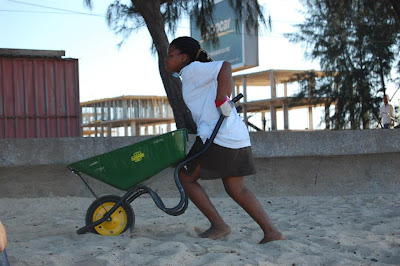
Viendo el esfuerzo que pone la gurisa de esta foto, me recuerda la cita
“Nunca dudes que un pequeño grupo de ciudadanos considerados y comprometidos pueda cambiar el mundo. De hecho, es la única cosa que ha logrado hacerlo.”

Friday, April 13, 2012
Vancouver Autoshow 2012: Are alternative cars really the way to turn green?
Get $5000 CAD for this car!

 Well, actually, what you get is up to $5,000 CAD taken from the retail price at the dealers. The incentive is pro-rated according to the type of car you get: $5,000 for a fuel cell car or an electric car, and at least $2,500 for a natural gas car.
Check out www.cevforbc.ca for more information; they’ve a neat brochure that summarizes their programs.
But what’s interesting to me is how much the BC government has earmarked for this initiative: ~ $6 million CAD is available till the end of March 2013! This is great incentive. I believe that, like the Scrap-It Program, this new provincial program will be a great success.
 Critics of these initiatives say the prices of these vehicles are still too high for most consumers. They argue, that, if you had $40K to spend on a car ... would you go for an alternative vehicle over a BMW?
I for one think that’s the wrong issue to focus on. The proper question would be whether you can get away from using the car in the first place. The money of this incentive, for example, can be used instead towards tax credits for those companies located near the homes of its employee (say, within a 10 km radius of 51% of its employees’ residences).
This type of incentive would address a couple of issues at the same time: migration of businesses, and greenhouse gases (GHG). I’ve noticed that a number of businesses, primarily high-tech, have been steadily moving out of Vancouver into the suburbs. No, not to Burnaby or Richmond, but further still: Port Coquitlam, Maple Ridge, Delta, and Surrey. One of the reasons: property taxes. Naturally, it stands to reason that businesses in a competitive market with very tight profit margins will take steps to decrease their operating costs. So why not help them to stay closer to their employees? In turn, the more people who can walk, cycle, or use public transportation to get to their place of work, the less dependency on automobiles, and the lower production of GHG .
So, yes, reduction in the use of our cars, changing to alternative models, using public transport, they all have an impact. However, what I would like to drive home is the importance of our choices as consumers: where we work and live, how we go from one place to another, or even how our food is transported are all important choices.
Wednesday, April 4, 2012
A couple of points about cars and traffic...
First, we need to recognize we are all part of the problem:

Second, we have to stop nonsensical behavior:

And then, we just have to switch to smarter, kinder behaviors... (more on that later)
Wasn't that easy?
Wednesday, February 15, 2012
¿Qué es soberanía alimentaria y por qué importa?
¿Cuál es la relación entre la soberanía alimentaria, las semillas, los productos orgánicos, las huertas urbanas, la agricultura sustentable, el autosustento y tantas otros temas que andan rondando por ahí?
Para empezar a entenderlo, un video argentino lo pone de forma muy simple:
O sea, que además de la seguridad y disponibilidad de alimentos, la soberanía alimentaria se fija en el origen y modo de producción de nuestra comida.
Pero empecemos por el principio. Disponer de una gran variedad de semillas que no sean genéticamente modificadas y que reflejen una amplia biodiversidad es una de los temas que preocupa.
Para empezar a entenderlo, un video argentino lo pone de forma muy simple:
O sea, que además de la seguridad y disponibilidad de alimentos, la soberanía alimentaria se fija en el origen y modo de producción de nuestra comida.
Pero empecemos por el principio. Disponer de una gran variedad de semillas que no sean genéticamente modificadas y que reflejen una amplia biodiversidad es una de los temas que preocupa.
Friday, December 30, 2011
Why does the title of the blog keep on changing?
The title of our blog, as you might have noticed, keeps on changing. Leaving a trace of the changes reflects the changes in direction, obviously, but also shows how the overarching goal of our trip becomes clearer as we move along.
You would think we would know what we were doing when we decided to sell everything and leave. Well, kind of. We love Vancouver and it's probably the best place in the whole world for us to live, but we felt it was time for a change. A next step.
Fadi blames that feeling of restlessness on his Third Culture Kid (TCK) status and his last name, which in Arabic means "bird." I can't do the same: my last name means"earth" or "soil" in Latin; you probably can't get more rooted than that. In my case it probably has to do with my ancestors, who kept on moving from country to country. If the records are correct, the different branches did some major moving: Netherlands, Portugal, Brazil, Switzerland, France, Italy, Argentina. And ending up in Uruguay didn't help. Either the condition of "pueblo transplantado" (transplanted people, according to Brazilian anthropologist Darcy Ribeiro) of its people, or its open, barrier-less and windblown landscape makes it too easy to want to go out and explore.
But I digress. Regardless of reasons, our moving was just the next step from a change that began more than 10 years ago when we decided to make quality of life a priority. Since then, we have been trying to live our lives so that they match more closely our values and beliefs (more about that later here and here).
As we move along, we seek (or, as it turns out, we run into) people that help us learn more about alternative ways of living, sustainable transport and energy, bio-construction, organic and urban farming, garbage and recycling, and other issues that we care about, and we also get a chance to give these alternatives a try.
 Not a bad way to learn and grow. And not a bad way to end the year. Plus an appropriate posting for the end of the year.
Our New Year Resolution? Be greener :)
Happy 2012 everyone!
(For those in Vancouver, if you want to start the year on a green note and let Canadian government know that we want Canadian behavior to match Canadian image, join the rally on January 1st by the Art Gallery downtown. Ahhh. I miss Vancouver).
You would think we would know what we were doing when we decided to sell everything and leave. Well, kind of. We love Vancouver and it's probably the best place in the whole world for us to live, but we felt it was time for a change. A next step.
Fadi blames that feeling of restlessness on his Third Culture Kid (TCK) status and his last name, which in Arabic means "bird." I can't do the same: my last name means"earth" or "soil" in Latin; you probably can't get more rooted than that. In my case it probably has to do with my ancestors, who kept on moving from country to country. If the records are correct, the different branches did some major moving: Netherlands, Portugal, Brazil, Switzerland, France, Italy, Argentina. And ending up in Uruguay didn't help. Either the condition of "pueblo transplantado" (transplanted people, according to Brazilian anthropologist Darcy Ribeiro) of its people, or its open, barrier-less and windblown landscape makes it too easy to want to go out and explore.
But I digress. Regardless of reasons, our moving was just the next step from a change that began more than 10 years ago when we decided to make quality of life a priority. Since then, we have been trying to live our lives so that they match more closely our values and beliefs (more about that later here and here).
As we move along, we seek (or, as it turns out, we run into) people that help us learn more about alternative ways of living, sustainable transport and energy, bio-construction, organic and urban farming, garbage and recycling, and other issues that we care about, and we also get a chance to give these alternatives a try.
Our New Year Resolution? Be greener :)
Happy 2012 everyone!
(For those in Vancouver, if you want to start the year on a green note and let Canadian government know that we want Canadian behavior to match Canadian image, join the rally on January 1st by the Art Gallery downtown. Ahhh. I miss Vancouver).
Saturday, November 26, 2011
Women, violence, and media
Curious how sometimes they connect, the randomly drawn information dots:
* a thousand black and purple women march in Montevideo against domestic violence and a picturesque gobbling of a president handles pro-women pamphlets,
 | ||
| Women against domestic violence (photo taken from here) |
* a thousand black and purple women march in Montevideo against domestic violence and a picturesque gobbling of a president handles pro-women pamphlets,
Subscribe to:
Posts (Atom)